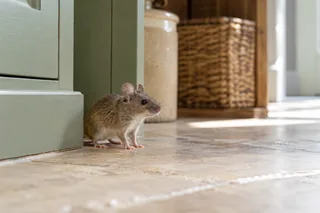


A mouse can enter through a gap that barely catches your eye. Finding that gap is harder than spotting it: a house may have many openings, and only some connect to a route the animal is using. If you have found droppings or damaged food, a careful inspection of accessible edges can help you decide where to seek repairs and what to show a pest professional.
Work from the evidence rather than walking around with sealant. Note the room where activity appears, then trace possible routes towards the outside. Keep the inspection at ground level and leave fixed fittings, electrical equipment and roof areas to people equipped to check them safely.
Why small gaps matter
The British Pest Control Association says mice can squeeze through openings of about six millimetres. Other BPCA material gives approximately five millimetres; the practical point is that a pencil sized gap should not be dismissed. A narrow space around a pipe or beneath an external door can matter more than a conspicuous crack that leads nowhere.
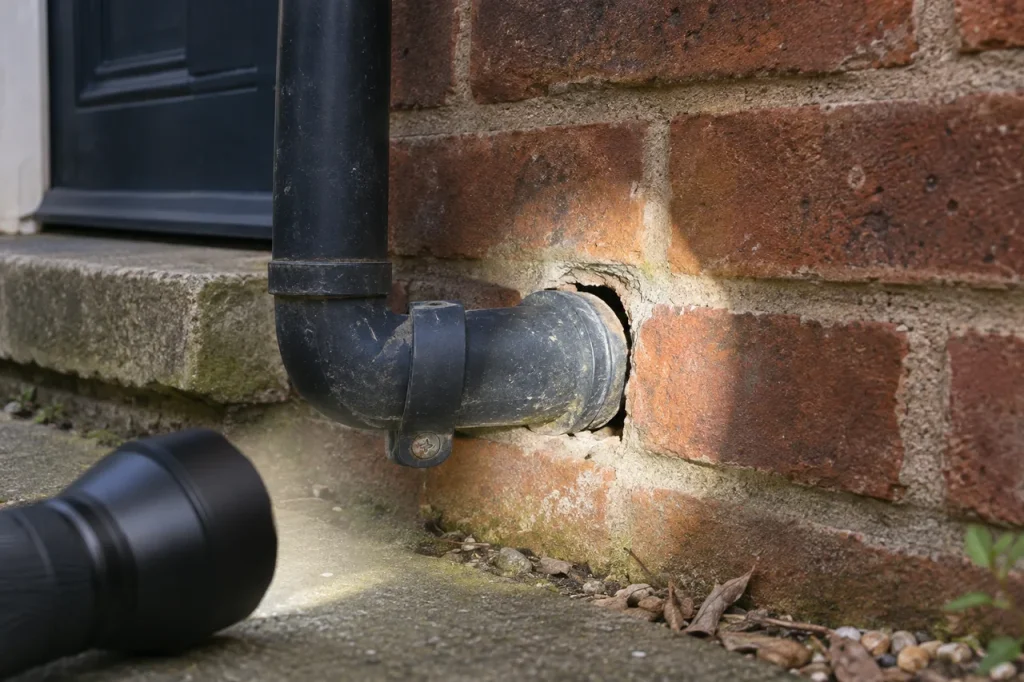
An opening alone is not evidence of active entry. Look for nearby droppings, repeated smears, gnaw marks or disturbed food. Photograph the gap with a scale and note whether the signs are inside, outside or on both sides. That context can help distinguish a likely route from a building defect that still needs attention but may not explain the present problem.
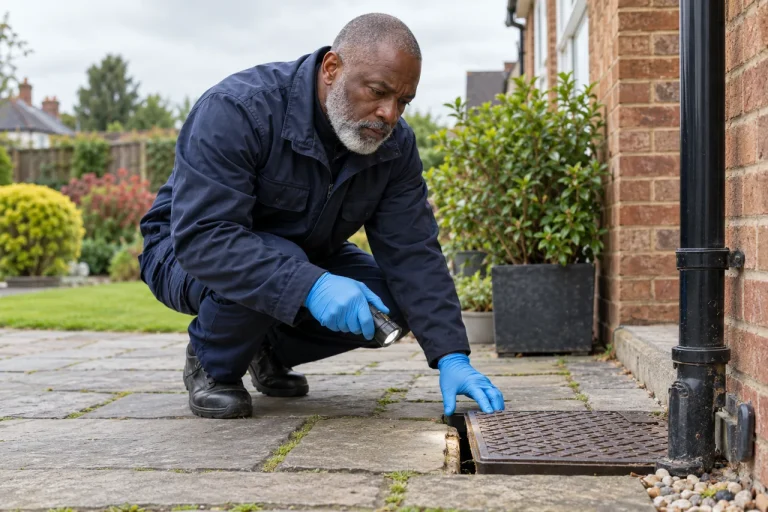
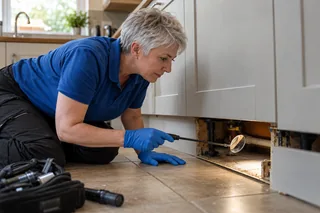
Do not test a suspected opening with your fingers. Use a torch and look from an accessible position. If a panel must be removed, ask someone competent to do it, especially where wiring, plumbing or insulation is involved.
Begin with external doors
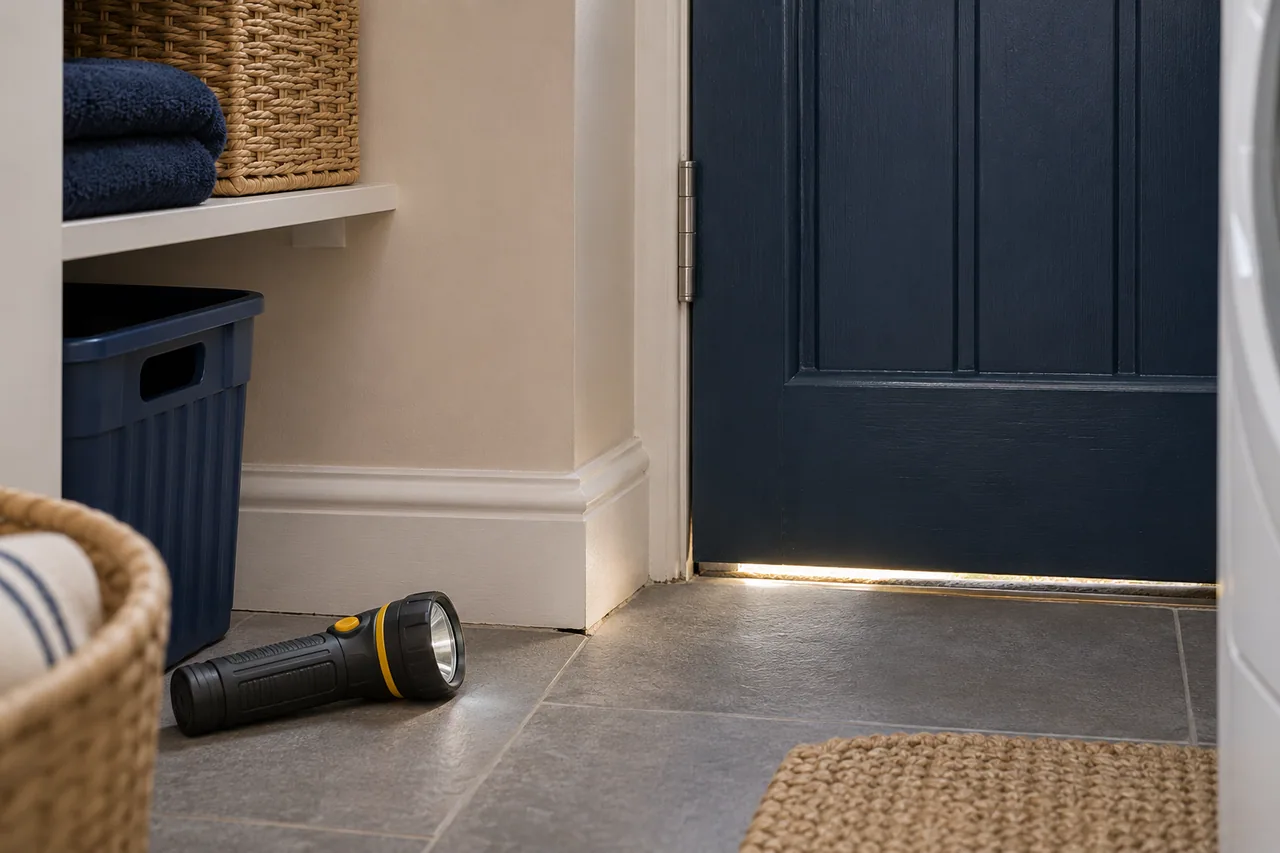
Examine the bottom edge of doors that lead outside or into a garage. Look for daylight at the threshold, damaged weather strips and corners where the frame meets the wall. A door may sit tightly in the middle yet leave space at one side. Check when it is fully closed, since a photograph of an open door tells you little about the normal gap.
Also inspect the junction between a step and the wall. Old mortar can crack and service cables may pass through nearby. Record any defect and the condition of the surrounding material. A door brush or repair may be appropriate, but the detail depends on the door and whether the opening is part of required ventilation.
Check pipe and cable penetrations
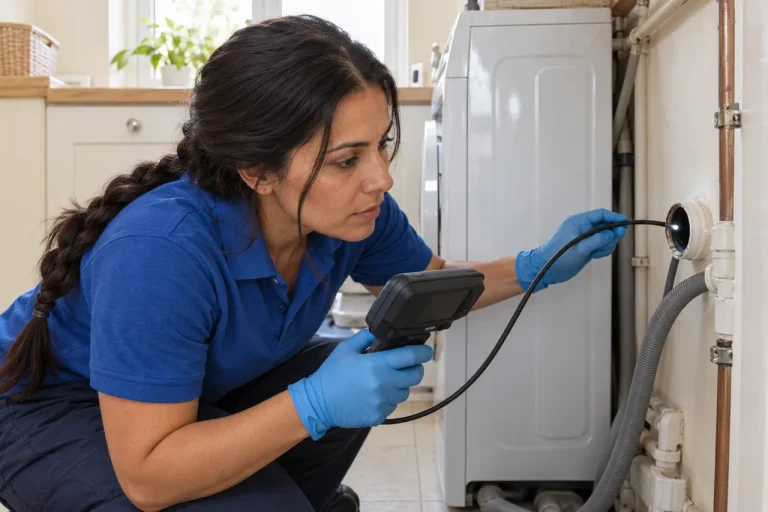
Water, waste and heating pipes often cross a wall or floor. The visible pipe may be sound while the ring of material around it has opened. From inside, check beneath kitchen and bathroom sinks, behind an accessible cupboard back and where radiators meet the floor. From outside, look at the corresponding wall penetration without moving heavy equipment.
Portsmouth City Council advises checking around water pipes, waste pipes, electrical cables and skirting boards when investigating mice. Gaps can connect to wall cavities or floor voids, so the visible room may only be one part of the route. A mark beside a pipe is more informative when it matches evidence elsewhere along the same edge.
Do not fill a gap around live wiring or a hot pipe with a material chosen at random. Building and fire safety requirements still apply. Ask the relevant trade or pest professional how the opening should be repaired, and whether activity needs to be resolved before permanent proofing.
Look at vents without blocking them
Air bricks and ventilators may be near ground level and can become damaged. Check whether a grille is missing, cracked or loose. The answer is not to seal a working vent: it may be needed for moisture control, a subfloor or an appliance. Hull City Council guidance recommends suitable fine mesh over air bricks while explicitly saying not to seal them.
Take a photograph and identify what the opening serves before arranging a repair. If you cannot tell, ask a competent building professional. A poorly chosen cover can restrict airflow and create a different problem even if it appears to close a possible mouse route.
Follow the inside edge
Once you have checked the outside, return to the room with evidence. Examine accessible skirting junctions, cupboard backs and the edges of service boxing. A mouse may enter the building in one place and emerge several metres away through an internal gap. That is why sealing only the hole beside a food cupboard may leave the broader route untouched.
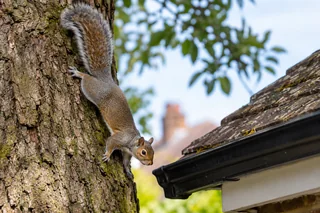
Keep notes of which openings lead into a concealed void and which are superficial cracks. Do not remove fitted kitchen units or insulation for a first look. If you discover damaged cable covering, stop and seek an electrician's advice. If you see signs from a larger animal, reconsider the identification before planning work.
Garden and outbuilding clues
Outdoor conditions can make an entrance easier to reach or harder to see. Check whether stored items conceal a wall edge, whether vegetation grows against a service penetration and whether bins are closed. The BPCA advises reducing shelter around a building by clearing debris and overgrown areas. These steps can make inspection easier as well as reducing attractive cover.
Avoid disturbing a possible nest in a shed or under decking. Note the location and any repeated signs. If the concern lies close to a drain or involves larger droppings, consider whether rat activity is possible. The rat control service addresses that different problem.
Make a route map before booking repairs
A simple sketch can prevent a scattergun approach. Draw the rooms where evidence appeared and mark each accessible opening with a number. Add the matching outside wall or door if you can identify it. Beside each number, write what you actually saw: a gap, a smear, a dropping or a damaged packet. Keep suspected connections as questions rather than marking them as confirmed routes. This distinction matters when a contractor has limited time and needs to decide which areas to open or repair first.
Photographs should show both detail and context. One close image records the size and condition of a gap; a wider image shows its position on the wall. Do not photograph only a dark hole that could belong anywhere. If an opening lies behind a cooker, boiler or fixed cabinet, record that access is restricted.
Compare the route map with the timing of signs. A kitchen cupboard that receives new droppings after cleaning deserves priority over an old gap in an unused shed. Look for a practical chain between food, shelter and access, but resist the urge to invent a complete route from one clue. An inspection may uncover a different connection in a floor or cavity.
Put proofing in the right order
First identify the animal and the active routes. Next agree how the current activity will be managed. Then repair the relevant gaps with materials suited to the structure. If you close an exit while an animal remains in a void, you may create further damage or leave the underlying problem unresolved. Advice from a professional can help sequence control and building work.
The mice control service in Pinner explains the site's inspection led approach. Share your gap photographs, room notes and dates. Ask which entry points are confirmed, which are only possible and who should carry out each repair.
After proofing, keep the record for follow-up. Recheck the same accessible edges, food storage areas and door thresholds rather than assuming every opening has been found. A well documented inspection gives you a practical repair list and a way to judge whether new signs appear.