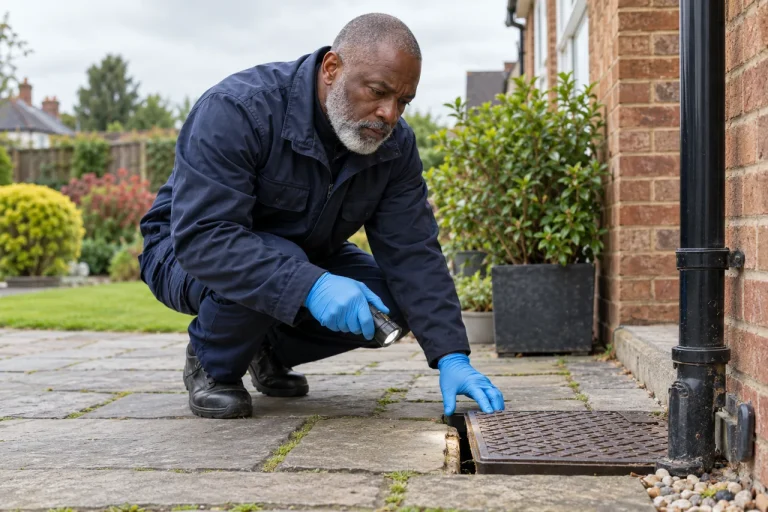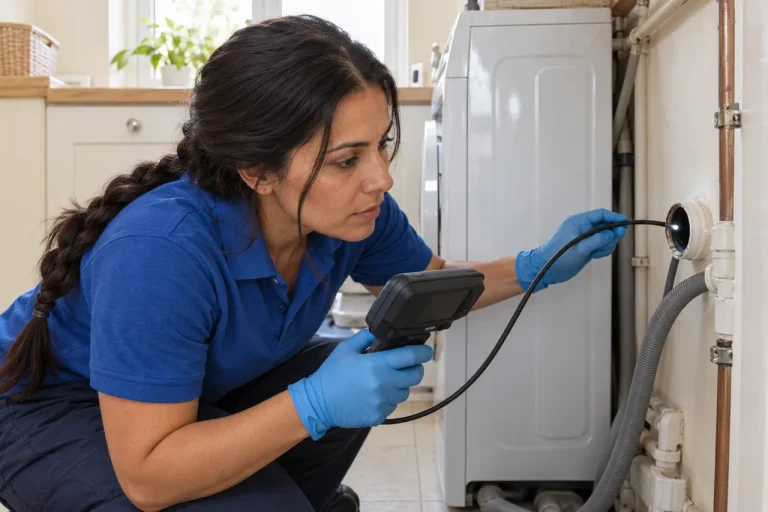
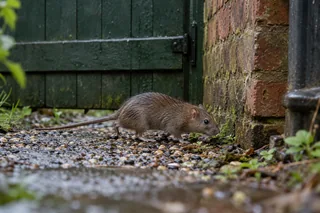
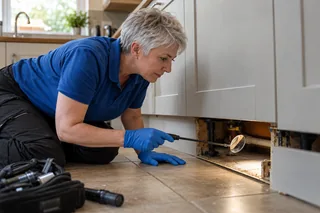
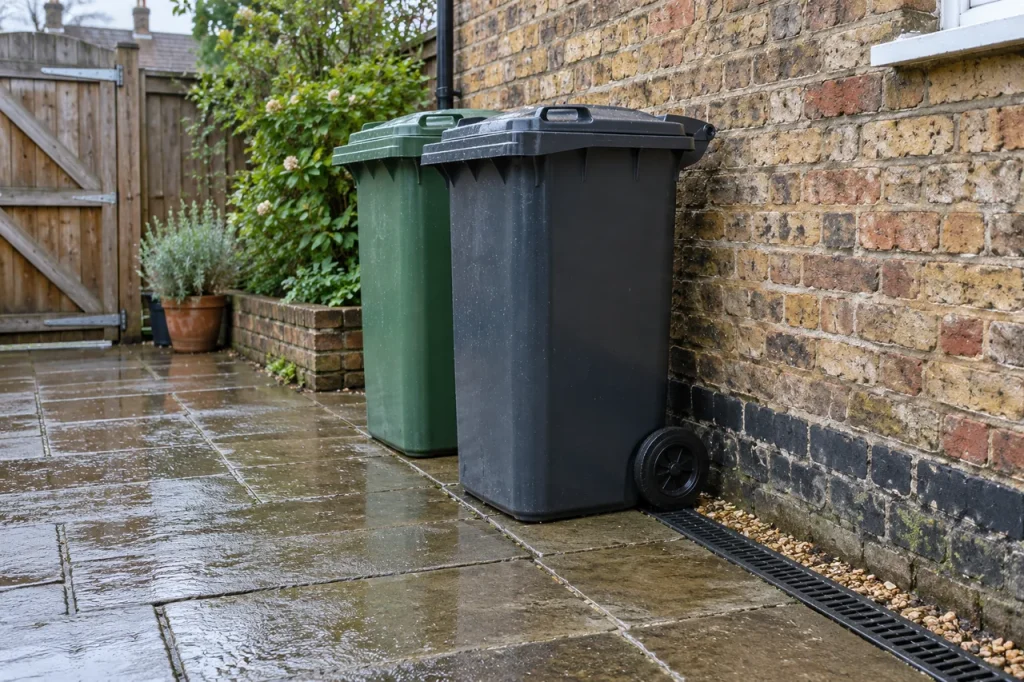
A rat seen beside an inspection cover raises an obvious question: is it coming from the drain? Sometimes the connection is real, but the location alone cannot prove it. A garden may also provide food and shelter, and the animal may simply travel past the cover. A careful assessment compares sightings, building defects and the condition of accessible drainage features before anyone opens a chamber or arranges a camera survey.
Keep people and pets away from a suspected route. Record the exact place and time of the sighting, then look from ground level for visible damage. Do not lift a cover, insert a camera or pour a product into the drain to test a theory.
The possible connection
Brown rats can live in sewer systems, according to the British Pest Control Association. A damaged pipe, poorly fitting chamber cover or disused opening may create a route to the surface or into a building. BPCA professional guidance says obvious defects such as broken pipes, defective covers and missing stoppers should be recorded during a survey.
That does not mean every rat in a garden arrived through a drain. Food waste, bird feed and sheltered structures can also explain activity. Even a cover beside a burrow may be a coincidence. The useful question is whether there is evidence linking the visible rat route to a specific drainage defect.
If the problem continues after other factors are addressed, a drainage check may become more important. A specialist can examine the relevant pipework and report whether a fault exists; guessing from the surface can lead to unnecessary work.
Signs you can note safely
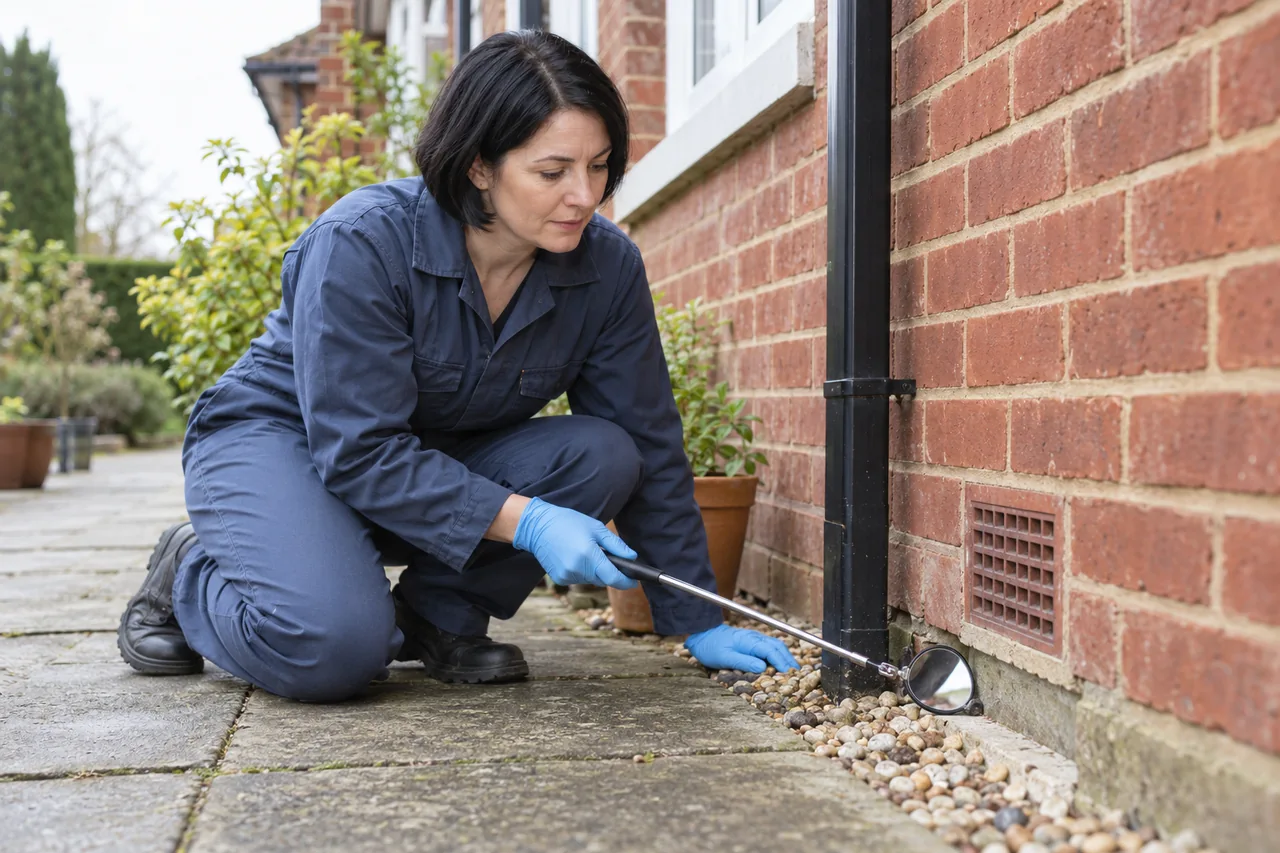
From outside the opening, look for a cracked or loose cover, damaged surrounding brickwork, a gap where a pipe meets a wall or a disused pipe end. Photograph each feature with enough context to show where it lies. Note any fresh soil, repeated droppings or a visible run nearby. Do not touch suspect waste or put your hand beneath a cover.
Ask whether the defect has appeared recently. Building work, changes to an extension or repairs to a garden path can alter the drainage layout. If you have plans or invoices for earlier work, keep them available. They may help a drainage specialist understand which connections are in use and which might be redundant.
Water backing up, unpleasant odours or damp ground may have other causes. Record them, but do not label them proof of rats. A drainage problem and a rodent problem can coexist without sharing the same route.
Map the animal's movement
If you see a rat, note where it emerged and where it went. A short video from a safe distance may be useful. A single movement past a cover is weaker evidence than repeated exits from the same point. Dated notes help distinguish one pass from a regular route.
Look for a chain between possible shelter, food and access. A trail under a shed, spilled seed beneath a feeder and a bin near a wall may offer a different explanation from a defective chamber. Keep these observations in the same record as the drainage signs so an inspector can compare them fairly.
Do not wait beside an opening at night to try to confirm it. A professional assessment can use appropriate methods and consider the whole site without putting you close to a startled animal or an unsafe cover.
Why a drain check is specialist work
BPCA's code of best practice describes rat related drainage inspection as a specialist task involving the sewer network, safety assessment and appropriate equipment. Chambers and confined spaces can present hazards that are not apparent from the surface. A camera image also needs informed interpretation; a mark in a pipe is not automatically a rat access point.
Ask a pest professional whether the evidence justifies a drainage contractor and which section should be inspected. If a defect is found, request a clear report of its location and the proposed repair. The person responsible for the drain may depend on where the fault lies, so the owner, managing agent or water company may need to be involved.
Do not assume that laying a product near the cover will solve a broken pipe. Control and repair address different parts of the problem. The order should be set by the findings and by the people competent to carry out each task.
Prepare for a possible drainage survey
If a survey is recommended, ask what question it is meant to answer. Is the contractor looking for a broken pipe, an unused branch, a damaged chamber or a route between the drain and the building? Agree the section to be checked and ask how the result will be documented. A photograph of a crack is useful only when its position and relevance to the rat evidence are clear.
Make access to known inspection points available, but leave covers closed until the contractor arrives. Note any cover hidden by planting, paving or stored items. If you have a drain plan, building survey or invoice for plumbing work, share it with the specialist. These records may reveal a changed connection or help avoid checking the wrong run.
Ask what the survey cannot see. A camera may inspect the inside of a pipe but may not establish every route through surrounding soil or a building void. If the result is inconclusive, request a reasoned next step rather than assuming that no defect exists. The pest inspection and drainage findings should be considered together.
Keep ownership and access clear
In a flat or shared property, an inspection cover may serve more than one home. Tell the managing agent or landlord what was observed and ask who can authorise a survey or repair. Do not assume that a visible cover belongs only to the nearest dwelling. A specialist can help identify the relevant section, while the responsible parties arrange access and work.
If activity is beside a boundary, share factual observations with the neighbouring occupier without claiming their drain is at fault. Photographs, dates and a clear location help everyone discuss the same evidence and prevent duplicated or conflicting work.
What to ask at the pest inspection
Show the sighting record, photographs and any known drainage history. Ask which evidence confirms rats, whether the activity appears to involve the building and which alternative food or shelter sources are present. Ask what visible defect, if any, points towards drainage rather than merely being near it.
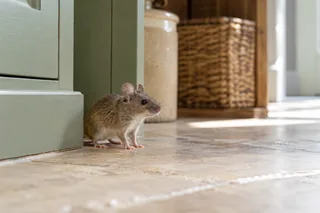
The rat control service in Pinner describes an inspection led response. Discuss whether building proofing, garden changes or a drainage survey is the sensible next step. If the signs are small and could indicate mice instead, the mice control service provides a separate route for identification.
Agree what will be monitored after any action. A fresh burrow, a repeat sighting at the same cover or new droppings inside a building may change the priority. A record of dates and positions helps avoid repeating a treatment while an unrepaired route remains open.
Keep the response proportionate
Close bins, remove spilled food and tidy accessible shelter while the investigation proceeds, following any advice from the inspector. Do not dismantle a drain, block a vent or seal an opening without understanding its function. A defect that affects wastewater or ventilation deserves a repair, not an improvised plug.
Rats near drains are a reason to look carefully, not a diagnosis of a pipe fault. Good evidence can direct the right specialist to the right part of the property and save disruption elsewhere.