
Something moves across the floor and disappears before you can look closely. Was it a mouse or a young rat? The answer matters because the animals differ in behaviour, likely routes and the work needed to resolve activity. A fleeting sighting, however, rarely settles the question. A reliable identification combines what you saw with droppings, damage and the places where evidence appears.
Keep the first description factual. Write down the approximate size, body shape, tail, time and direction of travel. Then inspect only accessible areas for supporting signs. Resist choosing a treatment based on a single blurry photograph or the assumption that a small animal must be a mouse.
What a sighting can reveal
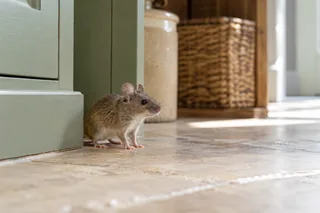
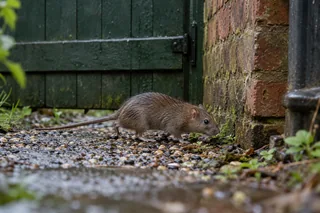
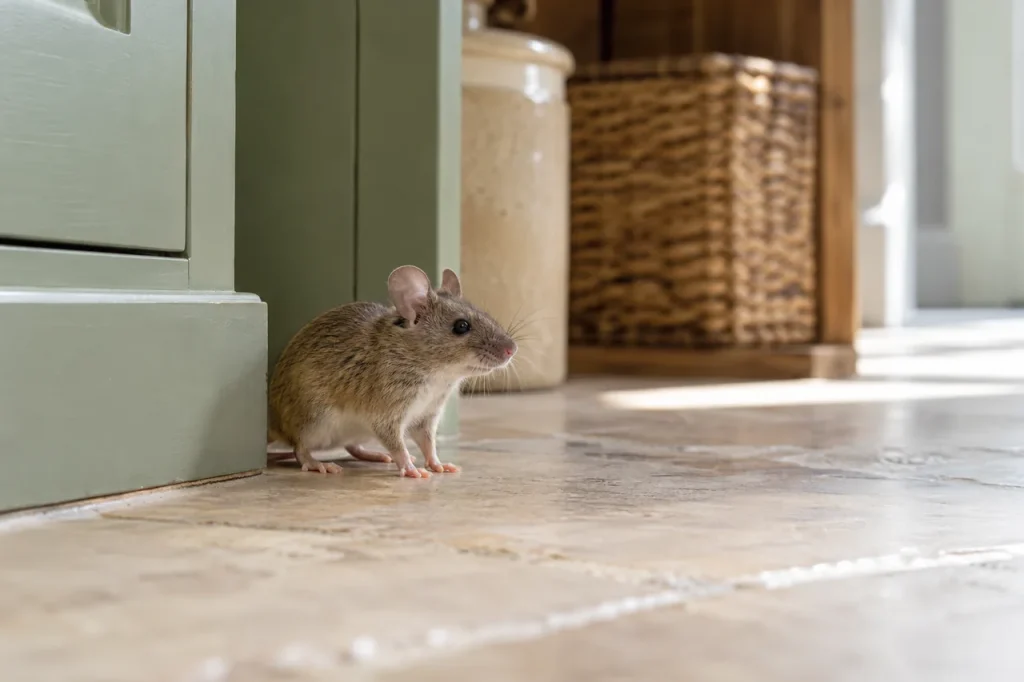
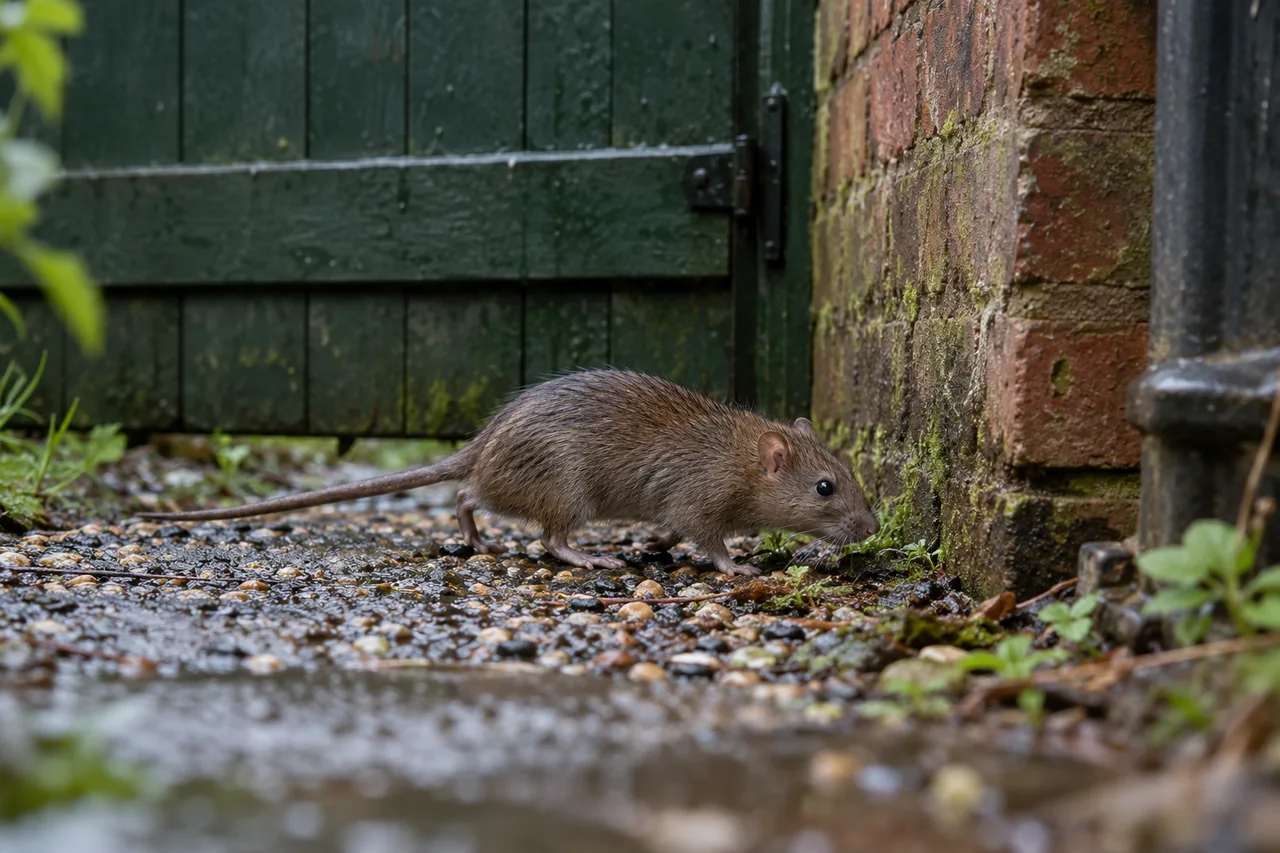
Cherwell District Council explains that an adult mouse and a young rat are different animals, despite their similar size at a glance. Relative proportions can help: a mouse usually has a finer build, pointed muzzle, relatively prominent ears and a thin tail. A rat appears heavier, with a blunter head and thicker tail. Lighting, distance and movement can distort all of these features.
If you have a clear video, preserve the original rather than cropping away the surroundings. The floor tiles or skirting board may provide a useful scale. A still image can show body proportions, while the video may reveal the route. Do not chase or corner the animal to improve your evidence.
Be careful with colour. Both rats and mice vary, and a dark animal in poor light may look larger than it is. A description such as “small dark rodent running beneath the sink” is more helpful than a confident species label unsupported by the view.
Droppings provide a second clue
Mouse droppings are generally smaller than rat droppings. BPCA guidance describes typical mouse droppings around five millimetres and some rat droppings around ten millimetres. Angus Council gives a wider range for mice and notes that common rat droppings can be about twelve millimetres. These figures are guides, not a household measurement test.
Photograph suspected droppings with a ruler or coin nearby, without touching them. Note whether they are scattered across a route or grouped near a shelter or food source. Their size and location together can narrow the possibilities, but broken, old or mixed material can mislead. Do not squeeze, crumble or sniff a dropping to identify it.
If cleaning is necessary, avoid sweeping or vacuuming the material dry. Follow appropriate public health guidance and keep children and pets away. Recording the evidence first lets you clean safely without losing the information entirely.
Compare the place and route
Rats may leave visible runs through low vegetation and burrow near sheds, banks or other sheltered structures. Mouse evidence often appears inside cupboards, along skirting or around small service gaps. These tendencies are useful, but neither animal is confined to one setting. Rats can enter buildings, and mice can appear in gardens or outbuildings.
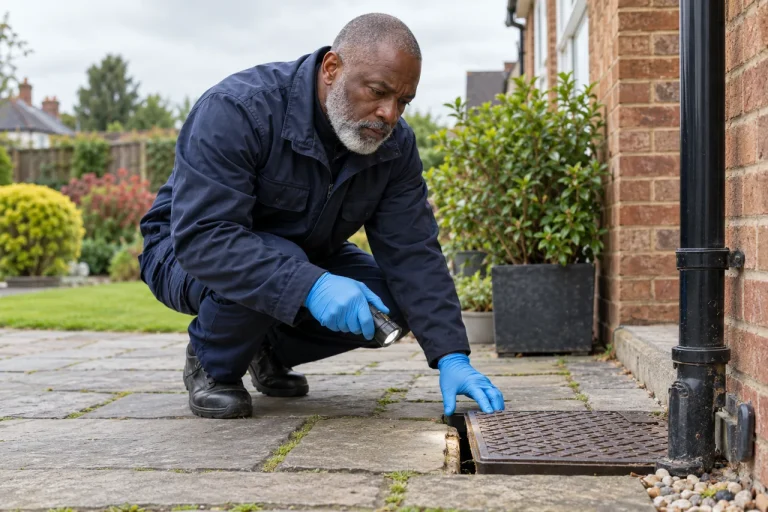
Look for a chain of signs. Does the movement lead towards a food source? Are there repeated marks along a wall? Is the opening connected to a floor or wall void? Record what is visible and what is hidden. A hole in a garden is a possible shelter, not proof that the animal seen in the kitchen came through it.
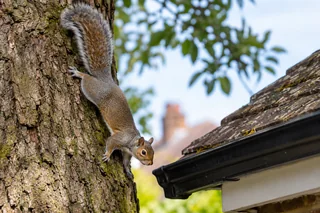
An apparent roof space problem adds another possibility. Squirrels and protected wildlife can also make noise above a room. Do not use the volume of scratching to decide whether you have a rat; sound travels through building materials. Identification should precede any attempt to close an opening.
Damage is useful but rarely decisive
Both rats and mice gnaw. Check food packets, timber, plastic and accessible cable coverings for new damage. Larger marks may raise concern about a rat, but the material, age of damage and viewing angle affect how they appear. Do not handle exposed wiring; arrange an electrician's advice if you see damaged electrical services.
Photograph the damage and the surrounding area. A torn bag beside a bird feeder tells you about available food, while repeated marks along an internal pipe route may point to movement through the building. Neither observation establishes the species alone. Ask what other evidence would support the conclusion.
Why the distinction changes the next step
Cherwell Council notes that treatment and proofing advice differ for rats and mice, and that rat activity may sometimes indicate a drainage defect. A plan based on the wrong species can overlook an important route. The appropriate response should consider the animal, the extent of activity, access to the affected space and risks to people, pets and wildlife.
The rat control service in Pinner addresses rat identification and likely routes. The separate mice control page explains inspection and aftercare for mouse activity. If your evidence is mixed, describe it honestly when arranging a visit rather than booking against an uncertain label.
Avoid putting out a product or trap merely to learn which animal is present. A device may be unsuitable or unsafe in the chosen location. GOV.UK advises using only lawful methods intended for the species and seeking professional help when the correct method is unclear.
Build a useful evidence bundle
Keep a short list of sightings with dates and times. Add photographs of droppings, damage, possible openings and the wider area around each sign. Include a sketch if the evidence spans a garden, garage and kitchen. Label uncertain items as such; an inspector can then evaluate them without having to undo your assumptions.
If several people witnessed activity, keep their descriptions separate until you compare them. One may have seen a thick tail while another noticed the size of the body. Contradictions are useful because they show what still needs checking. They do not mean someone must have been wrong.
Compare clues without forcing a verdict
Put the evidence into three groups: strong observations, supporting signs and unanswered questions. A clear view of the whole animal is stronger than a guess from a sound. Droppings photographed with scale may support the view. An opening or gnawed packet shows a possible route or food source, but it does not identify the animal by itself. This simple grouping stops a cluster of weak clues from feeling like a certain answer.
Consider when each sign appeared. A photograph taken before the current sighting may describe an older problem. Note whether a cupboard was cleaned, a shed moved or a door repaired between observations. Two signs can belong to different periods; they should not automatically be treated as evidence of one continuous route.
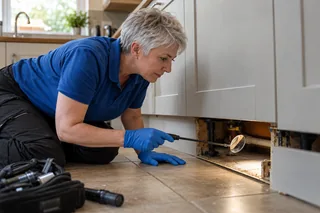
If the evidence points both ways, ask for an inspection that explicitly tests the identification. The professional may need access to a garden edge, kitchen void or loft hatch before deciding. Tell them what cannot be reached and why. Do not open a panel just to settle the question before the appointment.
After the inspection, keep the original notes. They provide a baseline for any later activity and help you understand whether a new sign matches the earlier pest.
After identification
Ask which clues confirmed the species and which routes remain possible. Discuss the order of control, cleaning and building repairs, especially if a drain, service void or shared wall is involved. Record the follow-up signs you have been asked to watch for and the period over which they matter.
The aim is a proportionate response to an identified animal, not a perfect answer from one pellet or one second of movement. A careful record turns uncertainty into a focused inspection and helps prevent an incorrect treatment choice.