
A few dark pellets in a cupboard can be unsettling. They might be mouse droppings, but a quick glance is rarely enough to identify them confidently. Size, shape and position provide clues; nearby damage and repeated findings help turn those clues into a useful assessment. The aim is to decide what needs checking next without touching the material or jumping straight to treatment.
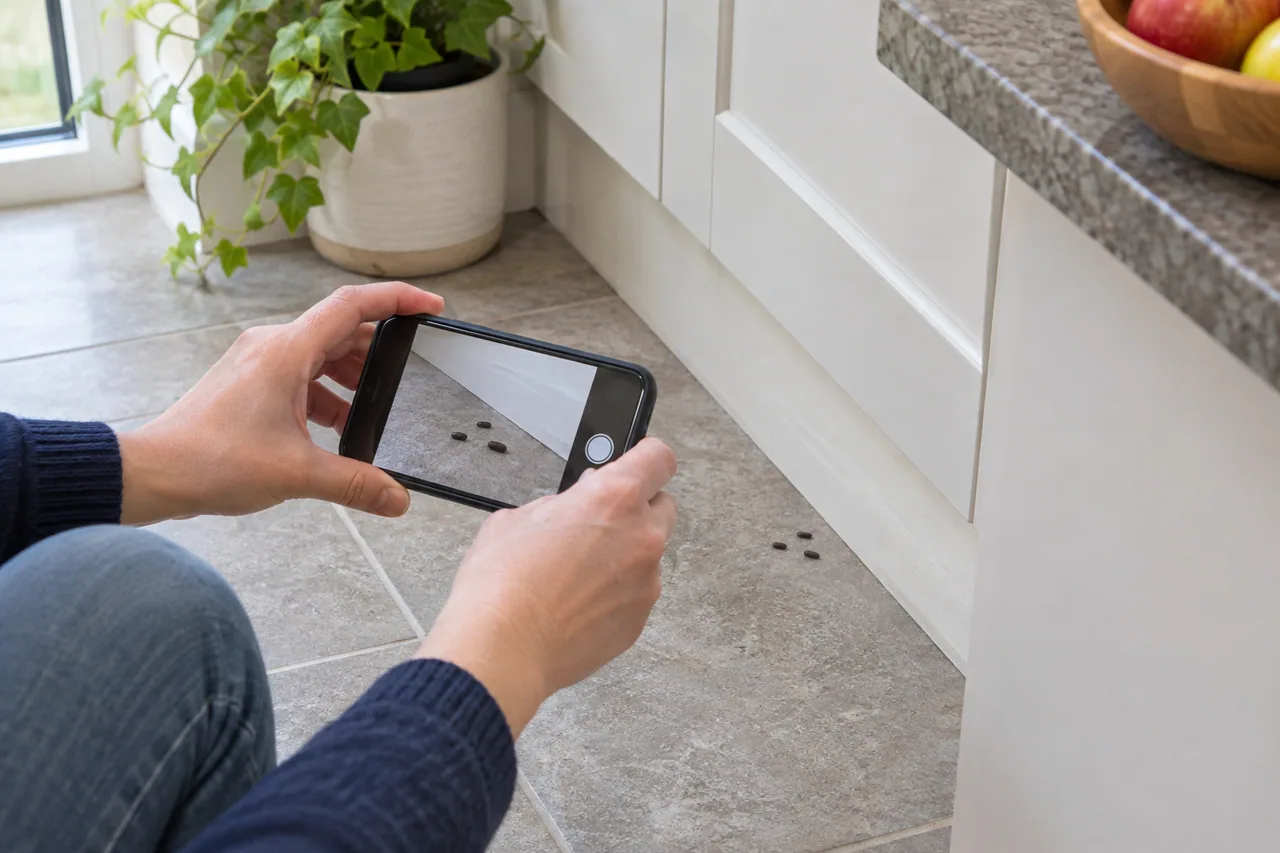
Start by keeping children and pets away from the area. Take a photograph before anything is moved, then note the date and precise location. If food packaging is affected, set it aside for assessment rather than putting it back among clean supplies.
What mouse droppings typically look like
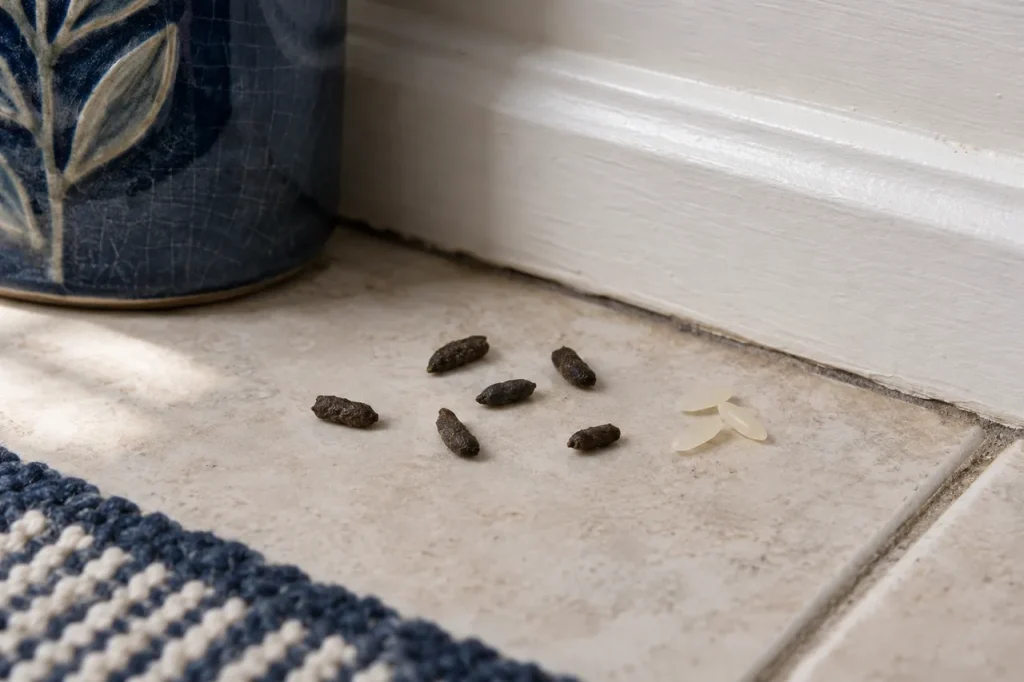
The British Pest Control Association describes mouse droppings as dark, rod shaped and around three to six millimetres long. Barnet Council compares their shape and size with a grain of rice. This is a useful visual reference, although colour can vary and an individual pellet may look different once it dries or breaks. A photograph with a coin or ruler nearby can help show scale without bringing your hand close to the material.
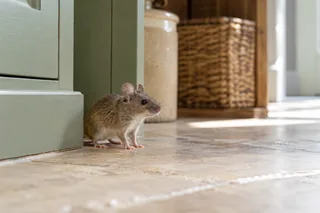
Pay attention to the pattern rather than one isolated piece. Several pellets beneath a sink, along the back edge of a cupboard or near food are more suggestive of movement than a single dark fleck in an open room. Mice can leave evidence in more than one place, particularly where a concealed route connects feeding and shelter. Repeated signs in the same accessible position deserve investigation.
Do not try to identify age by squeezing or breaking a dropping. Freshness is difficult to judge reliably by appearance alone, and handling suspected waste creates an unnecessary hygiene risk. Dated photographs are a better way to find out whether new material is appearing.
How rat droppings differ
Rat droppings are generally larger than those of mice, but there is no perfect household size rule. BPCA guidance uses roughly five millimetres for typical mouse droppings and around ten millimetres for some rat droppings when explaining why scale helps narrow identification. Size also varies with the animal and the individual dropping. A mixed photograph of pellets and surrounding clues is more informative than a measurement alone.
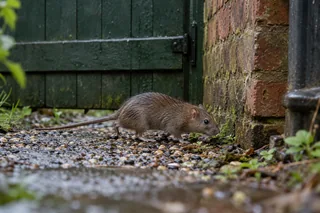
The location can help. Consider whether the evidence is inside a food cupboard, along a room edge, near a drain or in an outside area. Look for gnawing, disturbed packaging, a route through a gap or a sighting. Those observations may point towards a particular rodent, but neither a kitchen location nor a garden location proves which one is present.
If the evidence could be from a rat, use the rat control information for Pinner to understand the separate inspection route. An accurate identification matters because proofing and treatment decisions differ.
Other things that can resemble pellets
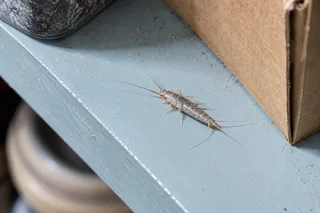
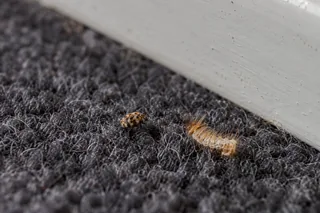
Seeds, soil fragments, insect remains and small pieces of insulation can look surprisingly similar when seen in poor light. Some insect evidence is dark and compact, while crumbly building material may collect in lines beneath a gap. A single grain found near a windowsill or plant pot should prompt a closer look at its surroundings before a pest conclusion.
Ask what else would explain the location. Is there a packet of seeds nearby? Has a shelf been drilled or repaired? Could debris have fallen from a cupboard fitting? Compare several pieces in good light using a photograph, but do not handle suspect material. If the answer remains unclear, keep the image for a pest professional to review.
Roof spaces need particular caution. Droppings there may belong to animals other than mice, including protected wildlife. Avoid disturbing a suspected roost or sealing a possible exit until the animal has been identified. Seek specialist advice if you see signs of bats or another protected species.
Look for supporting evidence
Small holes in food packets, gnaw marks on cardboard and dark smear marks along a frequently used edge may support a mouse identification. Scratching sounds can add context, but they are not proof. Sound passes through floors, walls and pipe runs, and the source may be farther away than it seems.
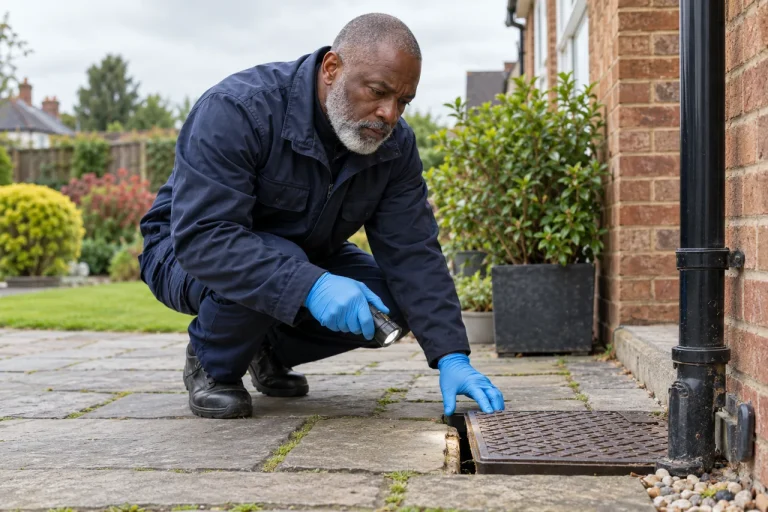
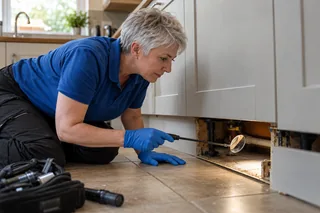
Inspect only places you can reach safely. A torch can reveal the back of an accessible cupboard or the floor beside an appliance. Do not put your hand into a void, move a heavy appliance alone or disturb damaged cables. If you find exposed electrical wiring, keep clear and arrange an electrician's advice.
Note where each clue was found. A simple room sketch with dates is often more useful than a long description from memory. Mark any food damage, pellets, sounds, possible openings and places that could not be checked. This helps an inspector distinguish confirmed evidence from areas that merely need attention.
Cleaning without spreading material
Suspected rodent droppings need careful handling. UK Health Security Agency guidance advises against sweeping or vacuuming mouse or rat urine, droppings and nests because this can put infectious material into the air. The published advice concerns pet rodents and contamination outside cages, but the precaution against dry disturbance is relevant when dealing with suspected rodent material at home.
If cleaning cannot wait, keep people away from the area and follow suitable public health guidance. The UKHSA advice describes gloves, damp removal, bagging waste, cleaning and disinfecting the surface, then washing hands. Do not mix cleaning products. Seek professional guidance where contamination is extensive, behind fittings, in insulation or near food preparation equipment. Photograph the evidence first if it is safe to do so.
Discard food that has been visibly contaminated or gnawed. Clean nearby storage surfaces appropriately and move unaffected food into closed containers. Tidying reduces attraction, but it does not tell you whether the source of the pellets is gone.
Deciding what happens next
If more pellets appear after cleaning, or if you also find damage, sounds or a live rodent, arrange an inspection. The mice control page explains the site's approach to identifying activity and checking accessible routes. Share your photographs and dates rather than guessing a population size from the number of droppings.
In a shared building, tell the managing agent or landlord where the evidence appeared. A gap around a service pipe or behind a communal fitting may connect several spaces. Do not assume that a neighbour's room is the source simply because the sign is near a party wall. Accurate dates and locations are more helpful than blame, and they allow maintenance work to focus on a plausible route.
If the pellets are near a pet's feeding area, remove leftover food after feeding and store the rest securely. Check the area again after it has been cleaned safely. New material in a protected cupboard carries a different implication from debris that was already there. Keep monitoring consistent: one photograph daily is enough to show a change. Avoid leaving food out to test whether an animal returns; that can encourage activity and make the problem harder to interpret.
An inspector should be able to explain which evidence supports the identification, what remains uncertain and which areas need further access. Ask about entry points, food sources and follow-up as well as immediate control. A confident name for one pellet is less valuable than a clear explanation of the whole pattern.
If you find only one unexplained speck and no other sign, keep observing the same area after safe cleaning. Record any new evidence without repeatedly disturbing the space. That measured approach avoids treating harmless debris as an infestation while still giving a real problem a chance to reveal itself early.