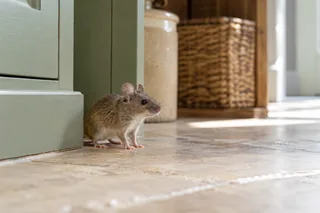


You may never see a mouse, even when one is moving through your home. Small signs in a cupboard, behind an appliance or along a skirting board often appear first. The useful question is not simply whether you have found something unusual. It is whether several clues point to active mouse movement, where that movement is happening and what might be allowing it to continue.
This guide helps you make a careful first assessment without pulling apart the kitchen or handling suspected droppings. A sighting is helpful, but a pattern of evidence can tell you much more.
Start with the evidence you can see
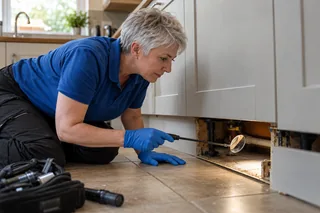
Look at the places where you first noticed a problem. A kitchen cupboard with damaged packaging deserves closer attention than a random crumb on the floor. Use a torch to inspect accessible corners, the space beneath a sink and the edges behind movable items. Do not reach blindly into a gap. Note what you find and where you find it before cleaning or moving anything.
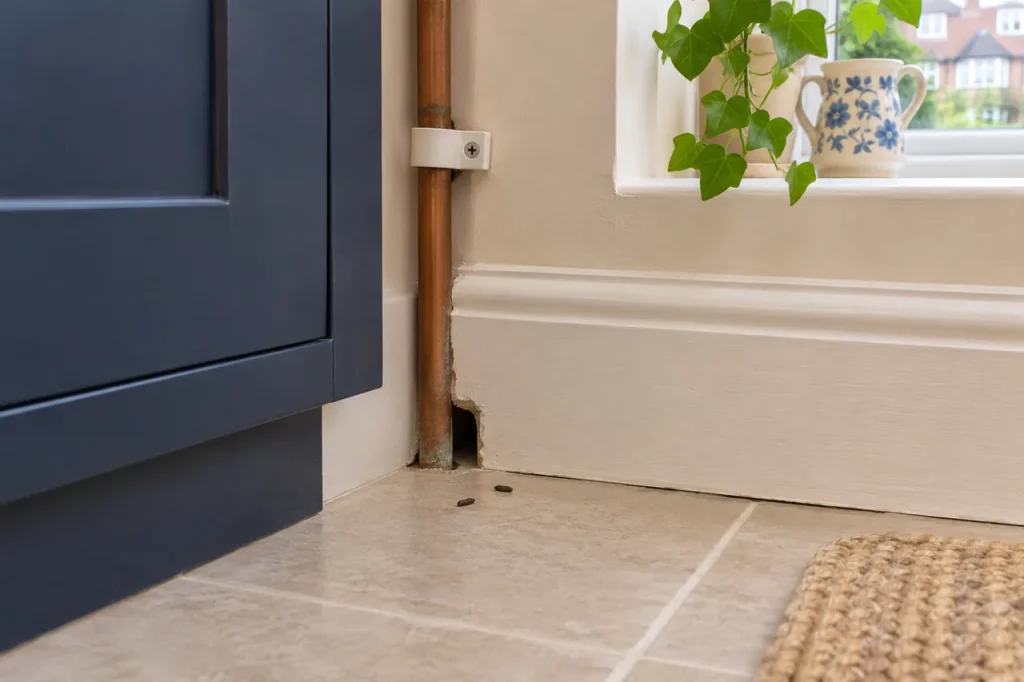
Mouse droppings are usually dark, narrow and roughly the size of a grain of rice. The British Pest Control Association describes them as rod shaped and approximately three to six millimetres long. Appearance alone is not conclusive: seeds, insect remains and other debris can be mistaken for droppings. Their location and repetition matter. Several small droppings along a wall, beneath a sink or beside stored food are more concerning than one unidentified speck.
If you are uncertain, take a clear photograph beside a familiar object for scale, without touching the material. Record the room and date. This gives an inspector a useful starting point and lets you compare new evidence later.
Check for more than droppings

Mice gnaw, and the damage may reveal where they have been feeding or travelling. Inspect food packets for small holes, especially near lower cupboard shelves. Look for marks on cardboard, soft timber, insulation or visible cable coverings. Damaged electrical wiring needs attention from a qualified electrician; do not handle or repair exposed wiring yourself.
Smear marks are another clue. Repeated movement close to a wall can leave dark grey streaks where fur touches a surface. These marks are easy to confuse with ordinary dirt, so consider them alongside droppings or damage. A strong stale smell may also occur where activity is concentrated, although a smell on its own does not identify a mouse.
Nesting material may include shredded paper, fabric or insulation in a quiet, sheltered place. Avoid disturbing a possible nest. Its presence could indicate an established problem, and moving it may scatter contaminated material or make the activity harder to trace.
Listen, but keep the sound in context
Scratching or light movement at night can raise suspicion, particularly near a kitchen void or inside a wall. Sound travels through floors and pipe runs, however. A noise heard above one room may come from somewhere else. Other animals and building movement can also create similar sounds. Write down when you hear it, how long it lasts and whether it follows the same route.
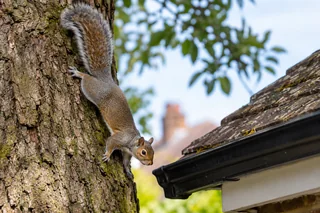
If the sound comes from a loft, do not assume it is a mouse. Rats, squirrels and protected wildlife can occupy roof spaces, and identification affects the appropriate response. Keep the loft closed if you cannot inspect it safely. A professional assessment is more useful than sealing an opening while an animal may still be inside.
Follow the likely route without dismantling the room
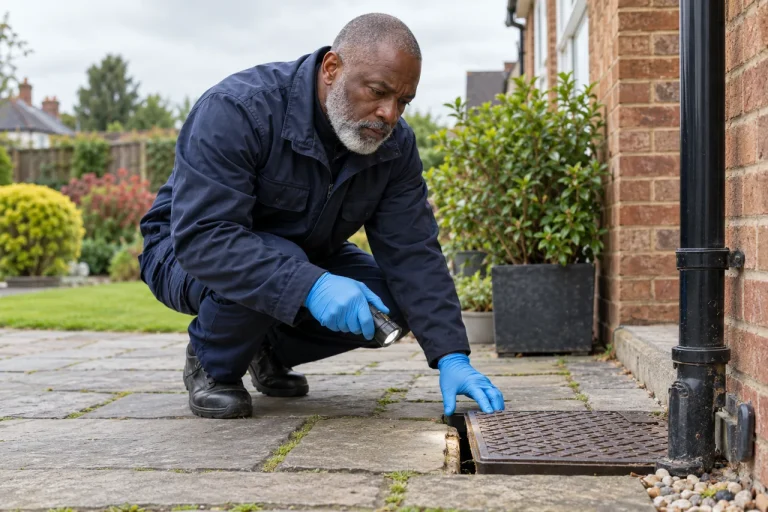
Mice often move beside edges and through concealed spaces. From the point where evidence appears, look along accessible skirting, pipe penetrations and cupboard backs. Outside, inspect from ground level around doors, vents and service entries. Do not climb onto a roof or remove fixed panels for a preliminary check.
A gap can look too small to matter. BPCA guidance notes that mice can enter through openings of about five millimetres. That makes a narrow space around a pipe worth recording. Yet an opening is not proof that it is being used. Fresh droppings, repeated marks or a clear route between food and shelter make the case stronger.
Temporary observation is often helpful. Photograph the same accessible area over several days, noting whether new signs appear. Avoid repeatedly rearranging the area, which can obscure the pattern. Keep pets and children away from suspect material while you investigate.
What to do on the first day
Start with straightforward housekeeping. Put accessible food, including pet food, into secure containers; wipe up crumbs and spills; close bins properly; and remove food left out overnight. These steps reduce easy access to food, but they do not confirm that the animals have gone or close an entry route.
Keep a short record: date, room, evidence, photograph and any sound or sighting. Tell other occupants what you found so they can avoid handling it and report further signs. In rented or shared premises, notify the person responsible for maintenance promptly. Activity may involve a route beyond one room or one flat.
Avoid improvised poisoning or placing devices where children, pets or other wildlife may reach them. The GOV.UK guidance on pest control explains that methods and products must be lawful and used for their intended species. If you are unsure of the animal or the safe approach, ask a competent professional.
When the signs justify an inspection
Arrange an assessment if you find repeated droppings, damaged food, a probable nest, a live mouse or fresh evidence after you have removed obvious food sources. An inspection is also sensible when the likely route lies behind fixed fittings, within a shared building or close to electrical services. Waiting for a daytime sighting may delay the decision without adding useful information.
The mice control service in Pinner explains how identification, accessible inspection and practical aftercare fit together. If the evidence could instead be from a larger rodent, compare the signs before choosing a response; the rat control page describes that separate service.
Tell the inspector exactly what you have observed rather than guessing how many mice are present. Photographs, dates and a simple sketch of the affected rooms can save time. Mention pets, children, inaccessible spaces and any previous treatment. These details help shape a proportionate plan and identify where further checks may be needed.
After the first assessment
Identifying the pest is only part of the job. A useful plan also considers food access, shelter, entry routes and follow-up. Ask which findings are confirmed, which remain uncertain and which gaps need repair. If treatment is proposed, request clear preparation and aftercare instructions tailored to the property.
Continue recording new signs after the visit. A quieter night does not, by itself, show that activity has ended; equally, one old mark does not prove that treatment has failed. Compare dated evidence and follow the agreed monitoring advice. Repairs and better storage can reduce the chance of another problem, but they work best when the active route has been properly identified.
Keep photographs and notes together until the follow-up is complete. If a cupboard is cleaned, record that date so a later mark is not confused with an earlier one. Check the same locations at regular intervals, rather than searching every room each evening. Consistent observations make changes easier to judge and give the person assessing the property an account of what has happened.
If you are looking at something you cannot identify safely, leave it in place and seek advice. Careful observations give you a stronger basis for action than assumptions about a single noise or mark.