


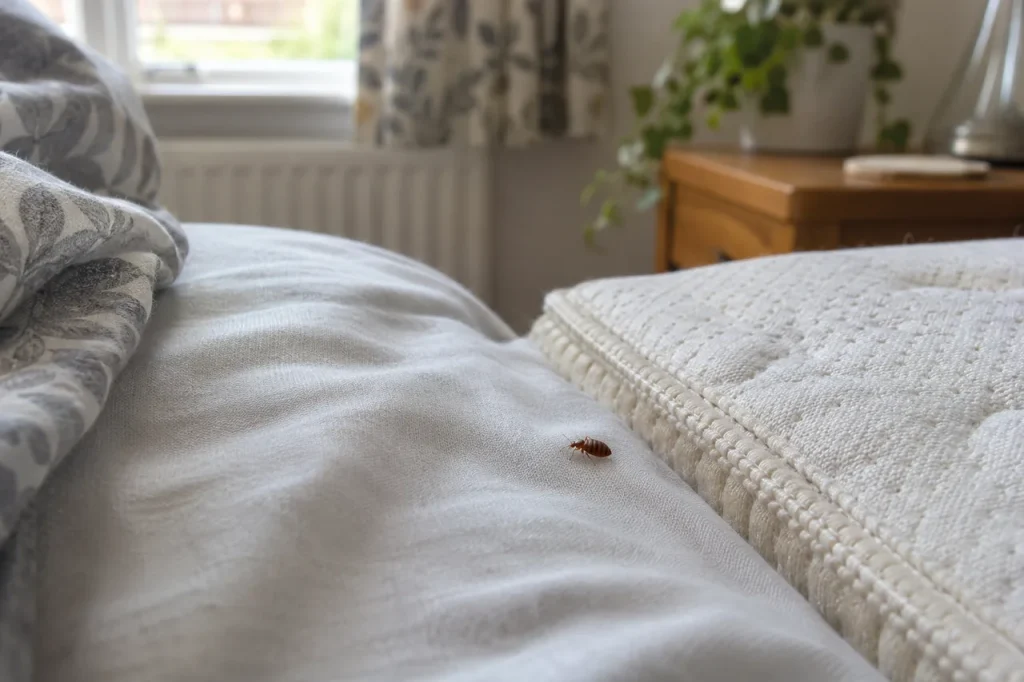
Finding a small brown insect on a bed can trigger an urge to strip the room immediately. Pause long enough to record what you found. A clear photograph or contained specimen can settle identification, while hurriedly carrying bedding and furniture through the home can make a possible problem harder to trace.
These first steps are deliberately modest. They help you preserve evidence, keep belongings in place and decide who should inspect the room. A single insect is a reason to check, not a complete picture of the building.
Record the insect before moving it
Take a sharp photograph from above and, if possible, from the side. Include a ruler or coin for scale. Note whether the insect was on a sheet, in a mattress seam, on luggage or elsewhere. That location matters when checking for further signs. Do not rely on a memory of its colour after it has moved.
If you can do so safely, put the insect in a clear sealed container. Avoid crushing it, which may hide useful features. Keep the container out of reach of children and pets. A pest professional may be able to identify a specimen more reliably than a blurred phone image.
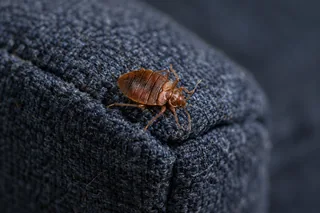
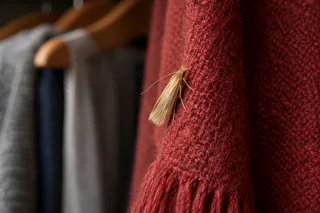
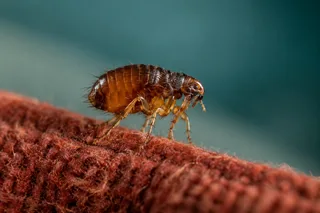
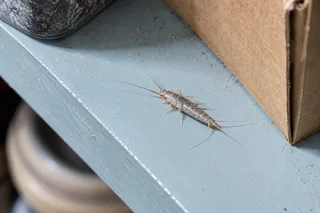
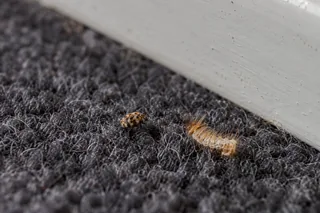
Many small household insects can resemble bed bugs. NHS guidance describes adult bed bugs as around five millimetres long and varying from dark yellow to red or brown. Size and colour alone are not enough. Ask for an identification based on the whole insect and any supporting signs.
Inspect the immediate area
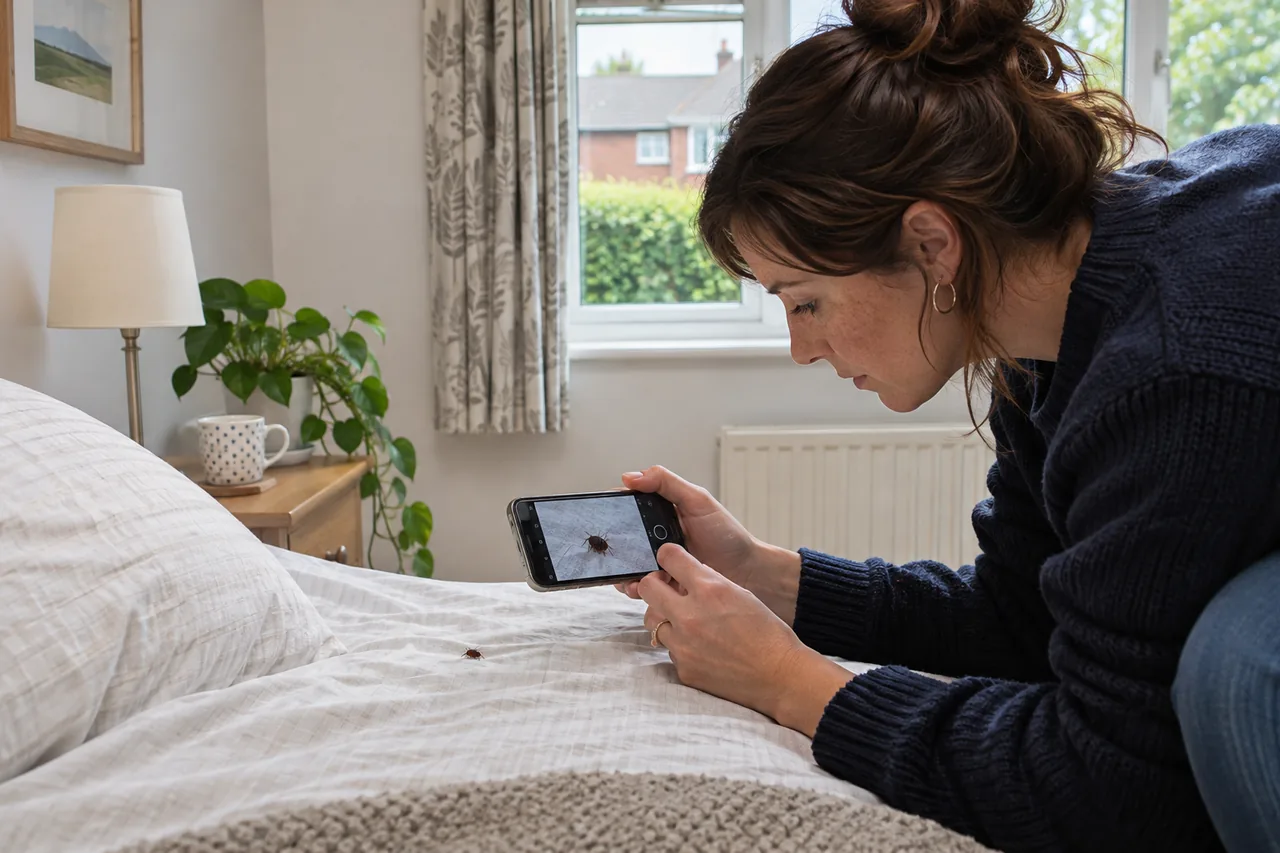
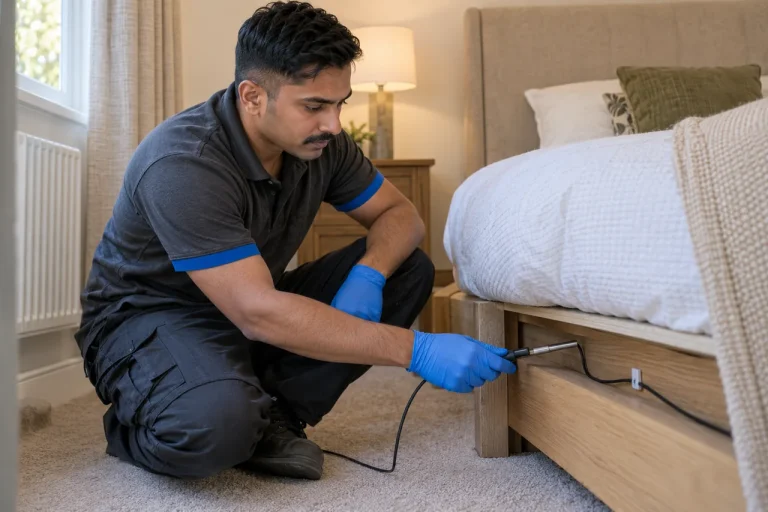
Check the bedding, mattress piping, bed frame joints and headboard in good light. Look for more insects, shed skins, small brown marks or blood spots. The NHS lists spots on bedding and furniture among signs, but individual marks can have other causes. Photograph the wider area as well as each close detail.
Move slowly from the place you found the insect. If it was on luggage, inspect the bag and where it rested before assuming it came from the mattress. If it was in a bed seam, note that exact edge. A simple sketch of the room can keep the observations clear for an inspector.
Do not pull apart a heavy frame or empty every cupboard in one attempt. You may scatter evidence and exhaust yourself without improving the identification. A professional can examine less accessible joints systematically once the first clues have been recorded.
Keep belongings contained
Avoid carrying loose bedding to another room to show someone. Share photographs instead. If laundry is necessary, place items directly into a bag and take them to the washing machine without shaking them through the home. Keep clean and unwashed items separate.
Do not move to a different bedroom as an immediate response unless there is another reason you cannot use the room. Moving people and belongings can change where any insects are found. Ask the pest provider about sleeping arrangements once the situation has been assessed.
Keep furniture in place. Throwing out a mattress may cost money and could transfer insects through a shared hallway. If disposal is later advised, follow a plan for containment and local waste rules.
Avoid quick chemical experiments
Do not spray several products into cracks or use a fogger to see whether more insects appear. Bed bugs can hide in narrow spaces and may be resistant to some insecticides, according to the NHS. Unplanned chemical use can complicate later treatment and may expose occupants unnecessarily.
If you have already used a product, keep the packaging and tell the pest professional what was applied and where. Follow the label's safety instructions. Do not combine products or assume that a lack of visible insects the next morning proves the problem has ended.
Wait for identification before deciding whether the room needs treatment. A different insect may call for a different response. The immediate aim is to preserve the evidence and prevent unnecessary movement.
Keep clear notes for products purchased. A technician can explain whether they affect treatment, and you can avoid repeating a measure that did not address the cause. If a product label gives a waiting period or re-entry instruction, follow it and tell everyone using the room.
Consider symptoms separately
Itchy skin marks can prompt a search but cannot identify bed bugs on their own. Hastings Borough Council cautions against treating bites alone as proof of an infestation. A live insect or physical signs in the sleeping area are more useful for the pest question.
If itching is troublesome, ask a pharmacist about symptom relief. The NHS advises contacting a GP if bites remain very painful, swollen or itchy after pharmacy treatment, or if pain or swelling spreads. Seek urgent medical help for symptoms of a severe allergic reaction. Do not wait for pest identification to address a health concern.
People in the same room may react differently. One person's lack of marks does not rule out insects, and several people's marks do not prove which insect caused them. Record symptoms without using them as the sole basis for treatment.
Ask for identification and a plan
Contact a pest control service or council if the insect appears to be a bed bug. The NHS recommends professional help because bed bugs are difficult to eliminate yourself. Share photographs, the location of the find and any other signs. If you have a specimen, ask how they would like to see it.
Ask what areas will be inspected, what evidence would confirm an infestation and whether preparation is needed before the first visit. Barnet Council notes that treatment preparation instructions are important, but these should be tailored to the provider's method. Do not dismantle a room based on generic advice before receiving them.
Request written findings if treatment is proposed. Confirm the method, safety instructions, follow-up and what occupants must do with bedding or belongings. A clear plan makes it easier to avoid carrying insects to another room while preparing.
If you rent or share a building
Tell the landlord, managing agent or relevant building contact what you found, with photographs and dates. Avoid claiming where the insect came from unless that is known. Bed bugs can travel with luggage, clothing and furniture, and the source is often uncertain.
Ask who can arrange inspection of a neighbouring room or shared area if evidence warrants it. In a shared building, coordination may prevent duplicated treatment or missed spaces. Keep communications factual and respectful; a suspected bed bug is a practical building issue, not a judgement about housekeeping.
If the insect is confirmed elsewhere, tell the provider about rooms where belongings were moved recently. That history can guide the inspection, but it does not mean every room automatically requires treatment.
What to do over the next few days
Keep a dated note of new insects, stains or shed skins. Repeat a focused check around the original location rather than searching the entire home every hour. Save clear photographs and avoid disturbing any treatment equipment placed by a professional.
Follow the provider's laundry and preparation instructions once the method is agreed. The NHS advises hot washing and drying for suitable affected items, but fabrics differ and professional directions may be more specific. Check care labels and keep items contained during transport.
If you found a suspect insect in a Pinner home, a bed bug treatment assessment can confirm it and set out a practical response. Bring the specimen or images, note exactly where it was found and explain what you have already done. Accurate first steps make later treatment more focused.