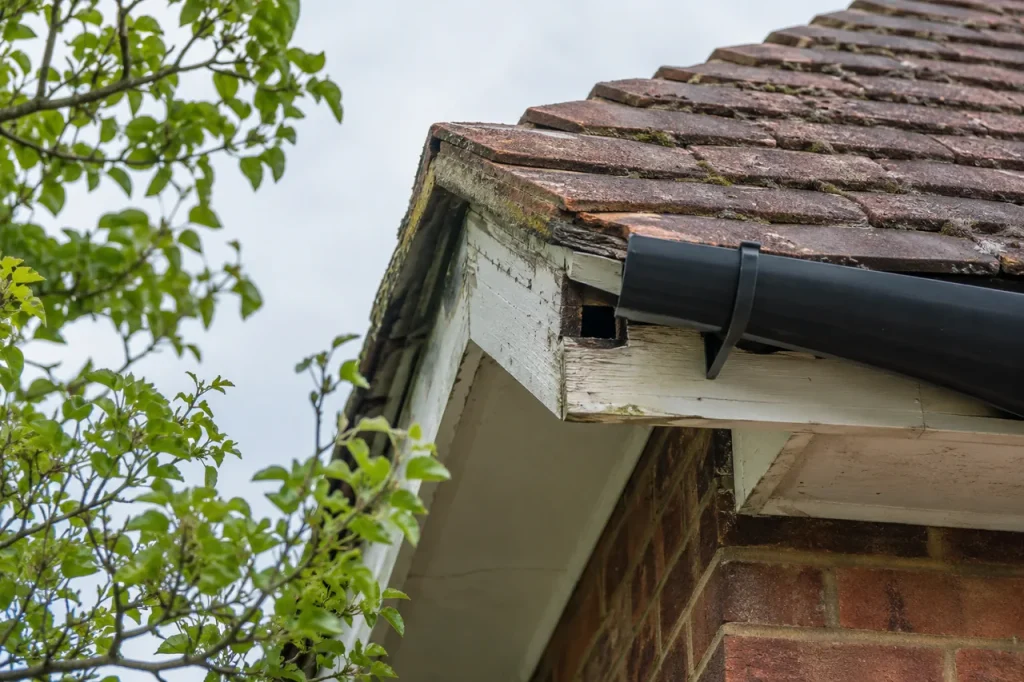
Finding an opening in a roofline can feel like finding the answer to a noisy loft. The difficulty is that a visible gap may be an intended vent, an old defect or an active entrance used by an animal. A safe check starts on the ground and looks for a repeated route as well as a hole.
This guide helps you collect useful observations for a pest professional or roofer. It does not require a ladder, access to fragile roof areas or disturbing anything inside a possible nest.
Choose a safe viewing position
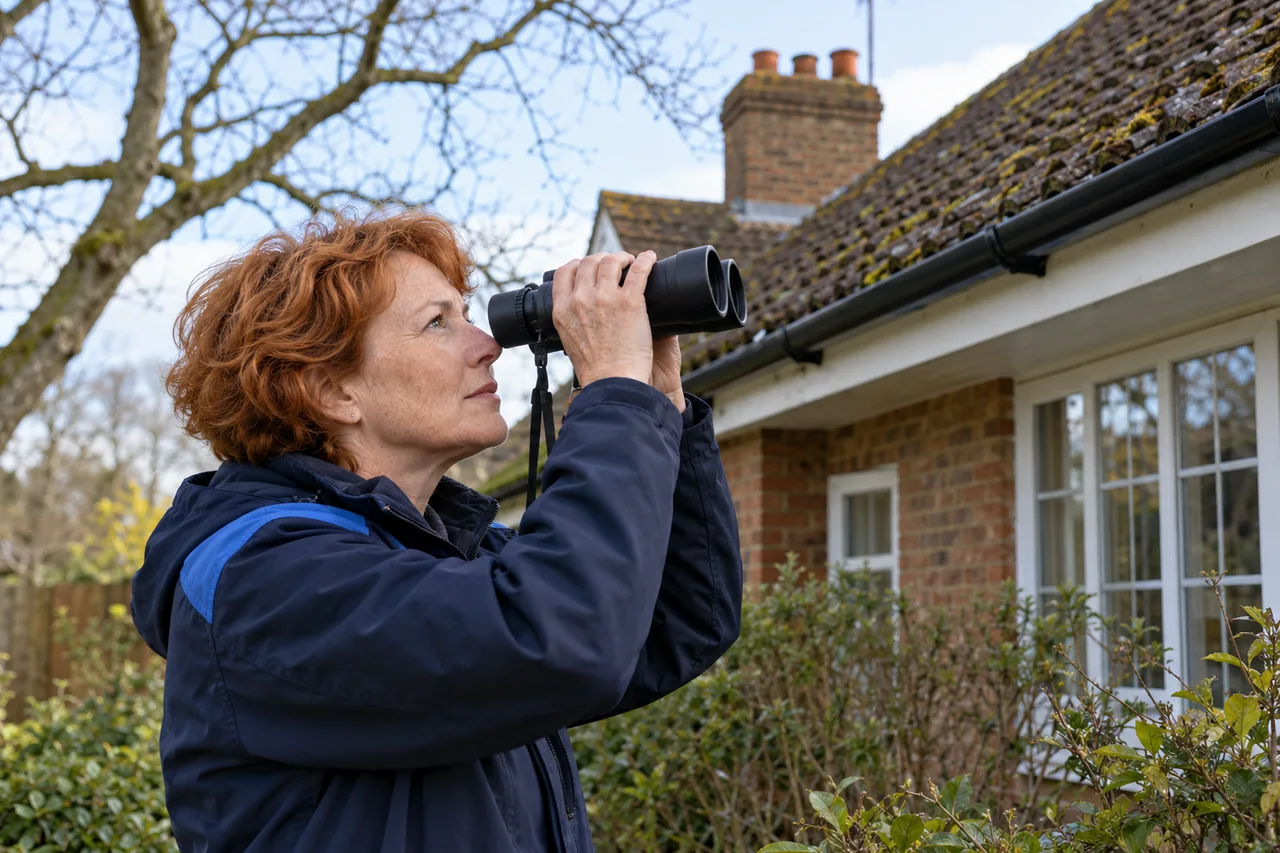
Walk around the property in daylight, staying on stable ground. Look at each side of the roof from a place where you can see the eaves, gutter and nearby branches. You may need more than one angle; a gap hidden by a downpipe from the front may be visible from the garden. Ask permission before viewing from someone else's property.
Binoculars or a camera zoom can make a distant detail clearer. Take one wide photograph showing the part of the building, followed by a closer image. That pair helps an inspector locate the issue. Avoid leaning from an upstairs window or standing beneath loose materials. If a section looks unstable, keep clear and arrange a building inspection.
Do not climb onto an extension, garage or shed to improve the view. A low roof still presents a fall risk, and its surface may not carry a person's weight. A professional can use suitable access equipment when a closer examination is needed.
Follow the route to the roof
Look for branches, fences, walls and structures that connect with the roofline. BPCA advice suggests trimming overhanging branches and removing items stacked against a building as possible prevention steps. An animal may use these features to reach an eave, but a route nearby does not prove entry.
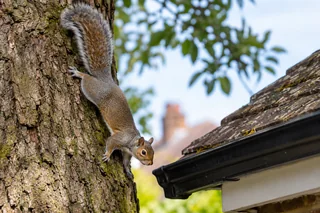
Watch from a safe distance at times when you have noticed movement or noise. Does a squirrel travel along the same branch and disappear at a specific corner? Does it emerge from that corner later? A repeated entry or exit is more persuasive than seeing an animal cross the roof once. Record the date, time and direction of travel.
If bird feeders attract squirrels into the garden, consider their position. A feeder alone cannot explain loft activity, but it may bring an animal close to the building. Note that link without attempting to chase or trap the squirrel. You can later discuss whether moving the feeder would reduce attraction.
Examine common roofline features visually
From the ground, check the line where roof covering meets fascia or wall. Look for lifted edges, displaced soffit panels, damaged vents and gaps near pipes or cables. A gnawed vent covering or damaged insulation foam can accompany squirrel activity, according to BPCA's squirrel guide. Photograph anything that looks changed since an earlier inspection.
Compare the same feature on different sides of the building. A regular series of openings may provide ventilation by design. A rough break or missing cover is more likely to need repair, though it still does not establish which animal used it. Do not seal a vent simply because it resembles an entrance; airflow in a roof space matters.
Check the gutter and downpipe area for displaced pieces rather than reaching into them. Debris can collect after wind or roof work. A small pile of material under one point may help locate damage, but its origin needs checking. If tiles or masonry may fall, keep people clear below until the structure is assessed.
Match outside signs with inside observations
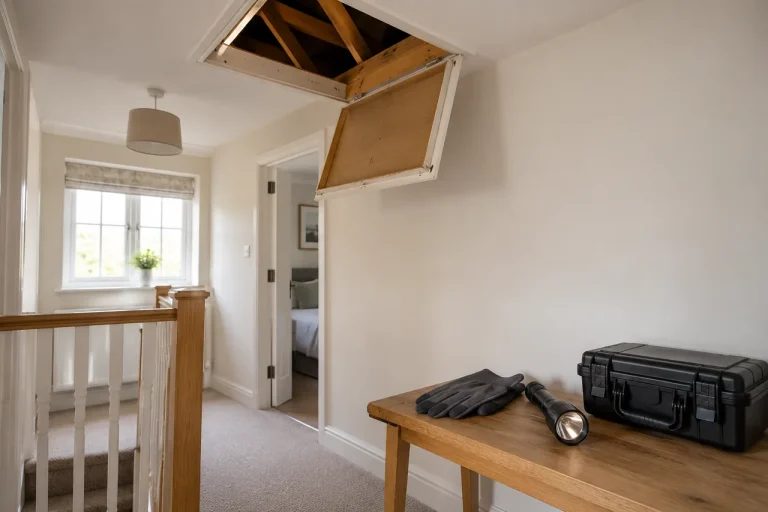
A roofline finding becomes more useful when it matches activity in the loft. Note which room lies beneath a suspected gap and where sounds seem to travel. If you can inspect safely from a loft hatch, look for displaced insulation or daylight at the corresponding edge. Do not step onto unboarded ceiling areas or pull apart materials to reach the eaves.
Listen for movement at the time you see an animal approach the roof. The combination of a visual route and sound may guide an inspection, although noise can travel through timbers. If you cannot confirm entry, describe the point as a suspected route. An honest uncertainty helps the professional decide what to inspect next.
Keep any photos and notes in order. A short sequence can show that a damaged panel worsened over several weeks or that activity has occurred at the same place repeatedly. This may be valuable when a roofer and pest technician need to coordinate work.
If you share a roof with another household, record which side appears affected and tell them what you observed. A joint inspection may prevent a repair to one section while an active route remains next door. Agree access with the owner first.
Remember other wildlife
An opening at an eave can be used by more than squirrels. Birds may nest there; bats can use small building spaces. GOV.UK guidance warns that bats and their roosts are protected even in a home. Do not poke into a hole, remove a cover or start intrusive work if protected wildlife might be present.
Watch for the animal rather than relying on a shape seen briefly at a distance. If you cannot identify it, leave the question open. A competent inspection can determine whether a wildlife specialist is required before roof repairs. The legal and practical sequence matters as much as the material chosen to close a gap.
Do not use an expanding foam can as an exploratory measure. It can block ventilation, trap an animal or complicate a later repair. A durable repair should suit the building and follow a check that the route is no longer occupied.
When to arrange a closer inspection
Repeated movement into one opening, active loft noise or visible damage deserves an assessment. A professional can inspect the roofline using suitable equipment and consider whether an animal is inside. Ask how the route was confirmed, whether other openings exist and when proofing can safely take place.
The inspection may show that the suspected gap is only part of the problem. An animal could have several routes, or the damage could be unrelated to the loft sounds. The aim is to find the active access and make a repair plan that will hold up after control work.
Ask for a clear description of the repair location. A marked photograph can be more useful to a roofer than a vague instruction to fix the eaves. Clarify which trade will carry out the work, whether scaffolding or specialist access is needed and who will check the result.
Make sensible prevention changes
Once the animal and route have been assessed, consider reducing easy roof access. A tree surgeon may be needed for branch work, particularly near overhead lines or a neighbour's tree. Move stored items that create a step up to a wall where practical. Keep gutters and covers in good repair through normal building maintenance.
Prevention is a continuing task. A roof may change after storms or later building work, so include the repaired area in routine checks from the ground. Keep dated photographs to compare with future conditions. There is no need to inspect every day once the problem is resolved.
If you suspect squirrels at a Pinner property, share your photos and observation log during a squirrel control visit. Ask the inspector to confirm the species and active entry point before anyone closes an opening. A careful sequence protects both the building and the animals involved.