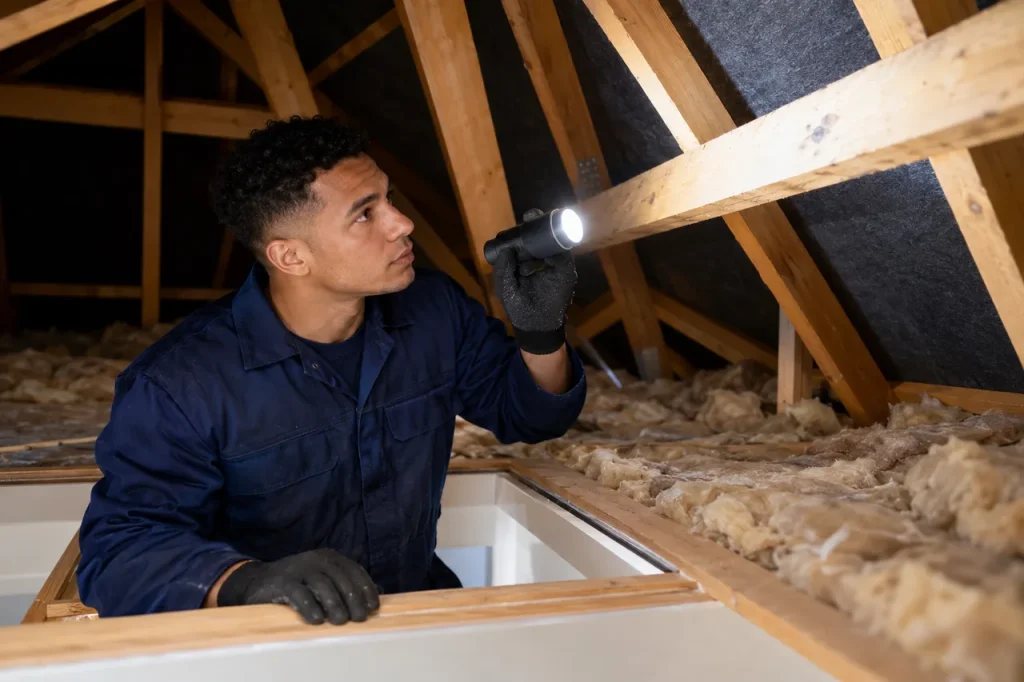
A sudden thump above a bedroom can make a quiet house feel crowded. Squirrels sometimes enter roof spaces, but a sound alone cannot identify the visitor. Birds, rats and other wildlife can also move around a roof. The useful first step is to collect several clues without climbing onto the roof or sealing an opening that might still be in use.
This guide focuses on the earliest signs a homeowner can notice from safe places. It also explains what an inspector may need to confirm before choosing any control or repair work.
Keep notes together so the sequence of events remains clear when several people have heard different sounds.
Listen for a pattern, not one noise
Scratching, rustling and quick movement from a loft or wall cavity are among the signs listed by the British Pest Control Association. A heavier scurry may draw attention, particularly when it moves across the ceiling. However, timber can creak and other animals can make surprisingly similar sounds. Record the time, duration and location rather than deciding the species from volume.
Listen over several days if there is no immediate hazard. Does movement coincide with an animal crossing the roof? Is it confined to one corner, or does it travel between rooms? Does the sound return after a brief quiet period? A short log gives an inspector more to work with than a description of one loud night.
Avoid banging on the ceiling or opening a hatch while movement is directly overhead. Startling an animal may drive it deeper into the structure. If you suspect damaged wiring, a burning smell or an electrical fault, treat that as a separate urgent building safety issue and seek appropriate help.
Watch the roof from the ground
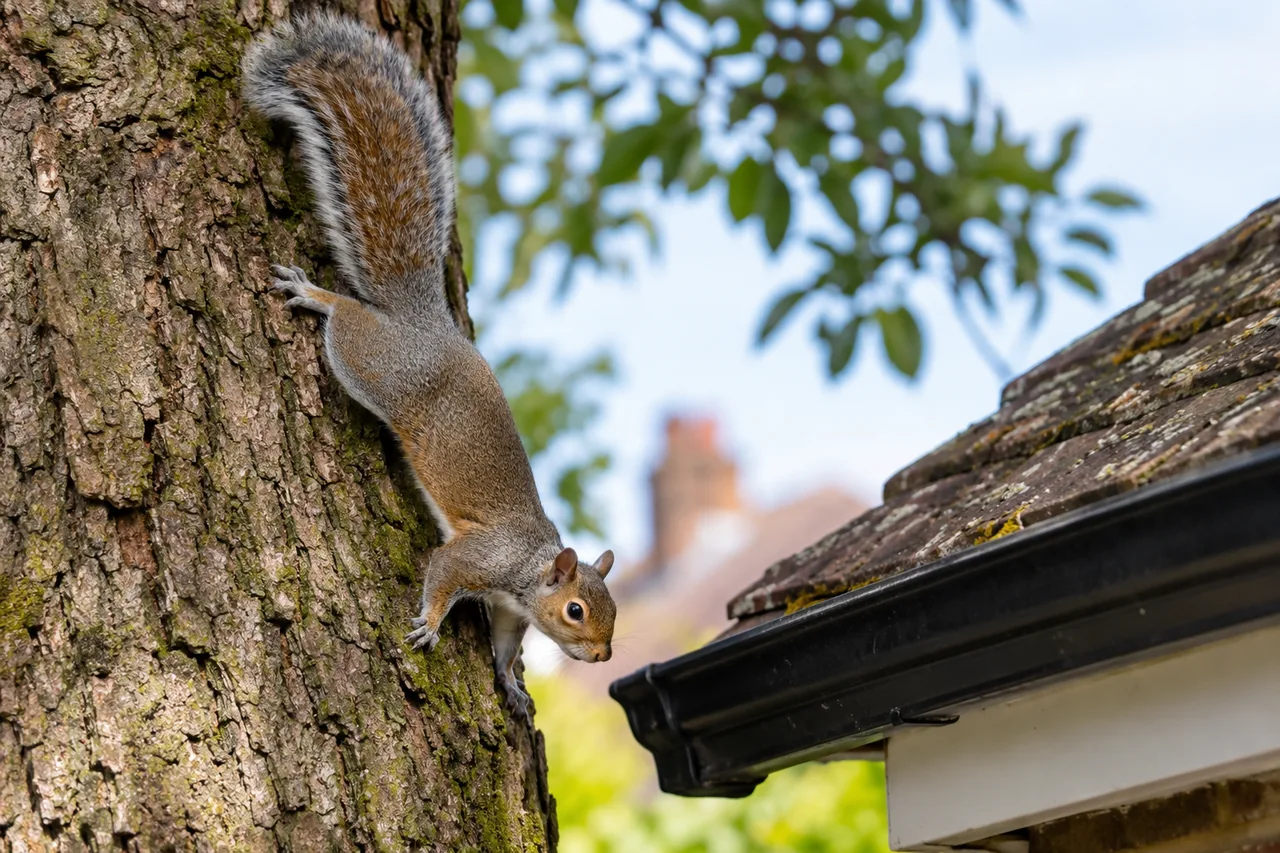
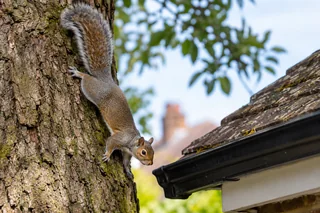
Look towards the roofline from a safe position during daylight. Repeated squirrel movement along a fence, branch, gutter or roof edge may indicate a route. Note where an animal appears to disappear, but remember that a squirrel running across a roof may simply be passing through. Repeated entry at the same point is stronger evidence than a single sighting nearby.
Use binoculars or a photograph if they help you see without approaching an edge. Check for displaced material around vents, fascia boards or eaves from ground level. Do not stand on a ladder to peer into a suspected gap. Roof work has fall risks, and close inspection may disturb an animal inside.
An overhanging branch can provide access to a roof, but its presence does not prove entry. Likewise, an open-looking joint might be a ventilation feature or an old defect. Photograph the area and let a competent person assess whether it is an active opening and how it should be repaired.
Look for disturbed loft materials
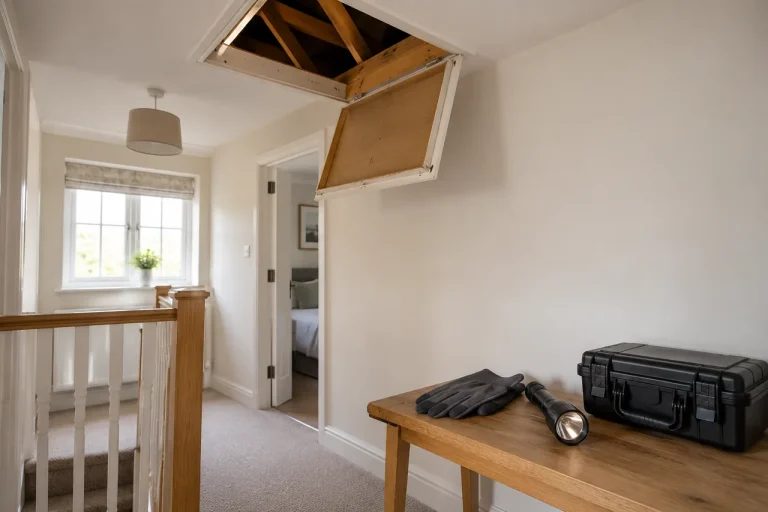
If a loft is safely accessible and there is no reason to suspect protected wildlife, inspect from the hatch or a suitable boarded area. Do not step onto insulation or ceiling plasterboard. Look for displaced insulation, gnawed material, torn vent coverings or nesting debris. Oxford City Council notes that squirrels in roof spaces can damage insulation, wiring and pipes.
You may see droppings, but size and shape can overlap with signs from other animals. Do not use a photograph alone as proof. Note where the material lies and whether it appears fresh. Avoid handling it without appropriate precautions, and do not sweep it into the air. A pest professional can assess several signs together.
A persistent urine smell may indicate that an animal has used the space for some time. It is not specific to squirrels. Water ingress, stored materials and other pests can also create odours. If you see a stain on a ceiling, first consider whether there is a leak; address building damage promptly even while species identification remains open.
Check nearby garden clues
Squirrels often visit gardens without entering a house. Disturbed bird feeders, missing fruit or nuts and bark stripped from a tree are signs that squirrels use the area, according to BPCA. Pair those clues with repeated roof activity before treating them as evidence of a loft problem.
Watch where an animal travels after leaving a feeder. A route across a boundary fence and onto a roof may help locate a possible entry point. Keep the observation brief and avoid trying to chase the animal. Removing easy food may reduce attraction, but it will not resolve an active loft entry on its own.
If several households share a roofline, observations from a neighbour may help identify the route. Ask what they have actually seen rather than relying on a general report of squirrels in the street. A dated sighting at the eaves is more useful than a guess about how the animal arrived.
Why identification matters
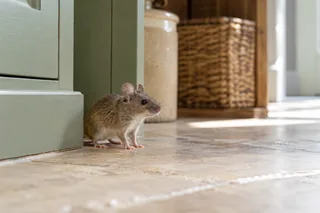
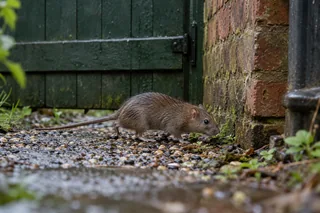
A bird in an eave, a rat in a roof void and a squirrel in a loft call for different assessments. Some species and their resting or breeding places have legal protection. GOV.UK guidance warns that disturbing bats or their roosts is an offence, including where they are inside a home. If bats are possible, stop intrusive work and seek specialist advice.
Grey squirrels also have particular legal rules. GOV.UK states that a captured grey squirrel cannot be released into the wild. This is one reason to obtain advice before setting a live trap. A householder should not assume that catching an animal creates a simple option to let it go elsewhere.
Identification also changes repair timing. Closing an active entrance without checking the space could trap an animal inside or leave dependent young behind. It may encourage new damage as the animal seeks another way out. A suitable plan confirms activity, addresses the animal lawfully and then closes the access route at the appropriate stage.
What to record before an inspection
Keep a short timeline of sounds, sightings and visible changes. Photograph roof activity from a safe distance, and note any area of insulation or vent damage you can see from a secure position. Tell the inspector about previous roof work, repeated leaks and nearby branches. Mention any bats or nesting birds you have noticed.
Describe the limits of your observations. If you have not entered the loft, say so. If the noise stopped after one day, that matters too. An assessment can identify whether monitoring is sensible or whether a physical inspection is needed immediately. It may also reveal a building defect requiring a roofer rather than pest treatment alone.
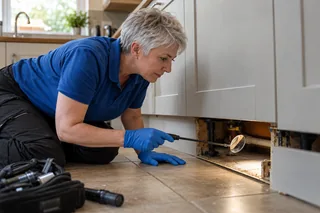
Ask the inspector to explain which signs support their conclusion. A clear account should separate confirmed access from a possible route. If materials need moving or a hatch needs opening, check who will do that safely. Keep any written findings so repair work can target the right place.
What to avoid meanwhile
Do not block a hole simply because you have found it. Check whether it is in use and what species may be inside. Avoid placing traps or bait in an occupied loft without understanding the legal and safety requirements. Do not pull apart insulation or damaged wiring to look for a nest.
Keep children and pets away from any material that falls from the loft. If you notice a serious electrical or structural concern, arrange the appropriate repair response. Otherwise, ordinary observation and a safe inspection are more useful than repeated disturbance.
For recurring sounds, roof entry or suspected damage in a Pinner home, arrange a squirrel control assessment. Share the evidence you have collected and ask how the animal will be identified before any opening is closed.